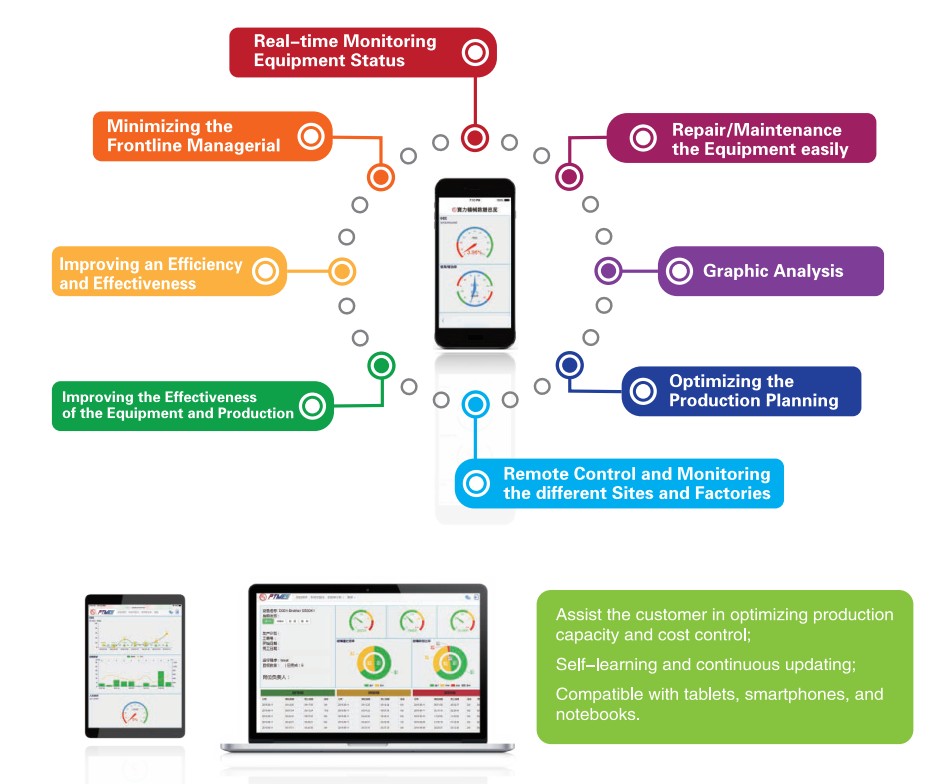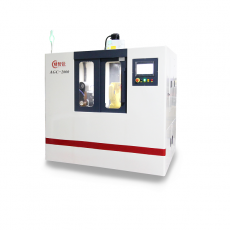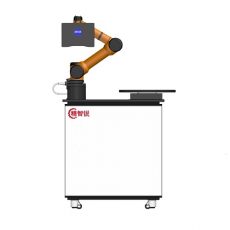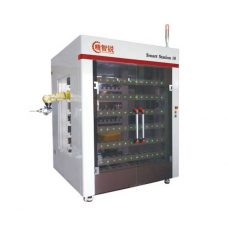


Backstage management

| 1. Automatically generate work orders for different processes based on order quantity and product technology, saving manual scheduling time. | 2. Graphical equipment work order scheduling information, convenient and quick to edit and modify the schedule. |

| 3. The processing program is transmitted to the cloud, and the processing program is centrally managed to ensure that the equipment is running correctly. | 4. The process flow definition provides a basis for system efficiency calculation, raw materials and semi-finished products, and output statistics. |

| 5. Graphical personnel scheduling management, improve the utilization of human resources, and control personnel's authority over equipment and work orders. | 6. Develop equipment maintenance plans, schedule maintenance work orders on a regular basis to ensure plan execution and extend equipment life. |
Real-time operation monitoring

| 1. Real-time progress monitoring of the work order for the day, real-time display of the work order progress on the workshop site, and more intuitive management. | 2. Order scheduling and progress, real-time understanding of the use of each device, and better control of order management. |

| 3. Real-time production monitoring to understand the current real-time production and compare it with the past. | 4. Real-time monitoring of employee working hours, visualization of employee performance, clearer and more intuitive indicators, and improved employee enthusiasm. |

| 5. Real-time tool information, monitoring tool parameter changes and service life, making preparations in advance and reducing downtime. | 6. Monitor personnel schedules to better understand the use of human resources and create more benefits for the company. |
Workshop visualization

| 1. Display the status of the equipment in real time so that managers can monitor the game anytime and anywhere and know how many devices are working. | 2. In the workshop map mode, the operating status of each equipment in the workshop is clear at a glance. |

| 3. List of factory equipment, convenient for checking the current working status of equipment, work orders being processed, etc. | 4. Equipment status distribution diagram, view the daily operation details of the equipment, understand the processing rhythm, personnel work and rest data and other data. |

| 5. The real-time status of the die-casting equipment, combined with the alarm prompt function, facilitates tracking of the problem handling progress and improves equipment efficiency. | 6. In the automation project, real-time monitoring and display of material warehouse status and material processing status. |
Production site management

| 1. Real-time progress monitoring of the work order for the day, real-time display of the work order progress on the workshop site, and more intuitive management. | 2. Order scheduling and progress, real-time understanding of the use of each device, and better control of order management. |

| 3. Real-time production monitoring to understand the current real-time production and compare it with the past. | 4. Real-time monitoring of employee working hours, visualization of employee performance, clearer and more intuitive indicators, and improved employee enthusiasm. |

| 5. Real-time tool information, monitoring tool parameter changes and service life, making preparations in advance and reducing downtime. | 4. Monitor personnel schedules to better understand the use of human resources and create more benefits for the company. |
Report

| 1. Overview report, real-time comparison of OEE, utilization rate, compliance rate, yield rate and other data, and a clear view of the increase or decrease of benefits. | 2. Collect statistics on employee timeliness and provide comparative month-on-month ranking and other analyses to improve employee enthusiasm. |

| 3.Production statistics report provides total production comparison and analysis data, and the factory efficiency information is clear at a glance. | 4. Utilization rate and downtime analysis, showing equipment utilization rate in real time through graphical form. |

| 5. Work order statistics report, which lists in detail the start and end time, output, compliance rate and other data of each work order. | 6. Equipment hourly production report can break down the production and defective number of each equipment into hourly statistics. |
Customer case

Customer needs and expected functions
Customers expect to use MES to collect data on the workshop production process, increase information transparency in the workshop, and track the progress of key core processes in the production process in real time.
Main required functions and indicator monitoring:
- Equipment failure management: Real-time monitoring of equipment alarm messages and statistics, as well as tracking and management of subsequent repairs and maintenance.
- Utilization rate (utilization rate, OEE, usage rate) is calculated in real time based on the collected data, allowing managers to more clearly understand the current progress.
- Production quantity: Real-time monitoring of production progress to ensure on-time delivery of orders.
- Defective data: Manage and control defective data so as to find out the causes of defects in time, reduce costs and improve efficiency.
The real-time data collection of the equipment includes the following three aspects:
- Real-time data of die-casting equipment (including cold mold parts, number of cold molds, pot temperature, start and stop time, downtime, mold change time, maintenance time, alarm, fault record, nitrogen pressure (second block pressure, boost pressure, punching pressure), and display the data in PTMES.
- CNC machining: Collect machine data from other machines through the network, including status, current program, speed, feed rate, and display the data in PTMES.
- Workpiece deburring: Pro-Tech will collect PLC counter data, save and display it in PTMES

Equipment utilization index
| Since the customer applied the PTMES system, through constant communication and collaboration between the two parties and continuous improvement by the PTMES team, a more stable data collection program has been provided. The PTMES team has also pointed out to the customer the meaning of the collected data and charts, as well as areas for improvement. We can see that after the system was put into operation, there is a clear upward trend in the equipment utilization data. |

Equipment usage and work order completion rate
| 1. Detailed data on equipment usage. From the report, we can easily see the overall operating situation, better judge the impact of the external and internal environment on the enterprise, and provide more detailed data and indicators for decision-making. | 2. Another very important indicator is the work order completion rate. From this indicator, we can see that the overall benefit has indeed increased regardless of the influence of utilization calculation, different work order numbers, different product processing time, etc. |


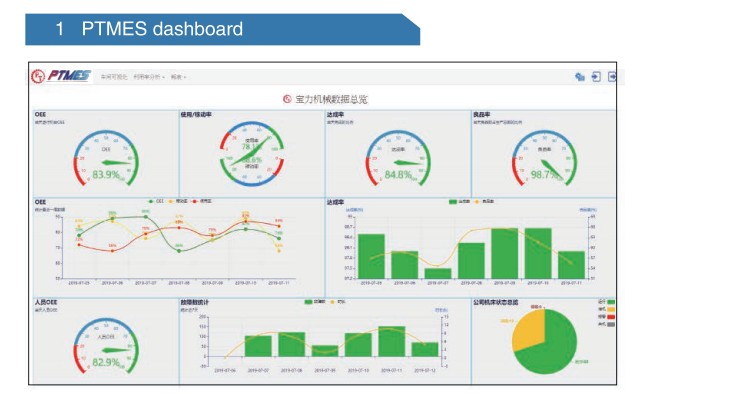
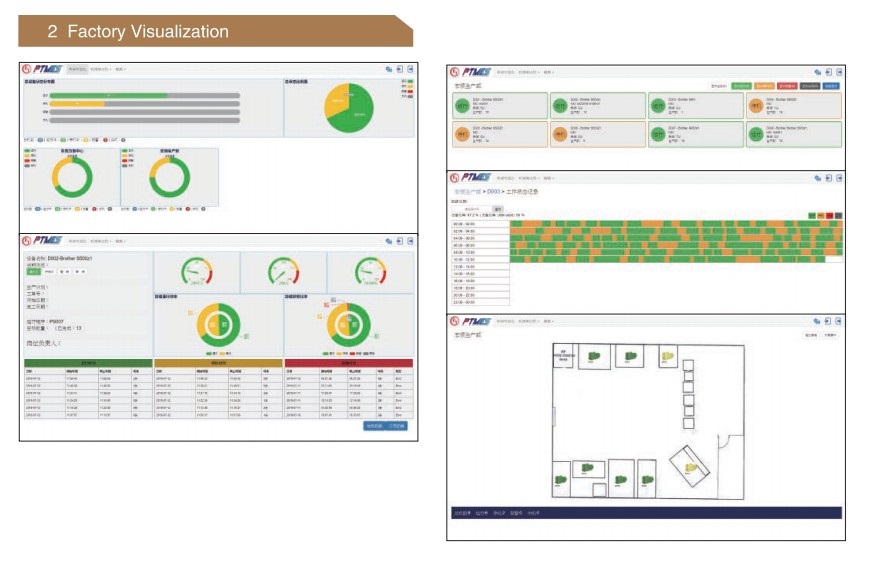 PTMES can display all equipment detailed status, from the on/off status, job status, to job process data, and
historical records, which can be easily accessed and viewed through the system.
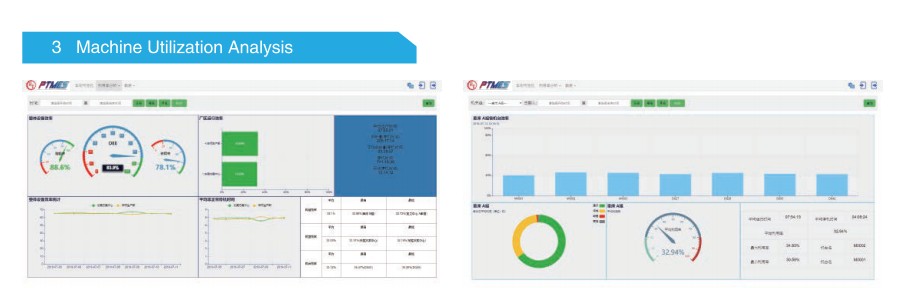 The powerful data analysis function of the PTMES system can easily and flexibly generate the utilization analysis from all the equipment to a single equipment in the system, and display the specific visual data report.
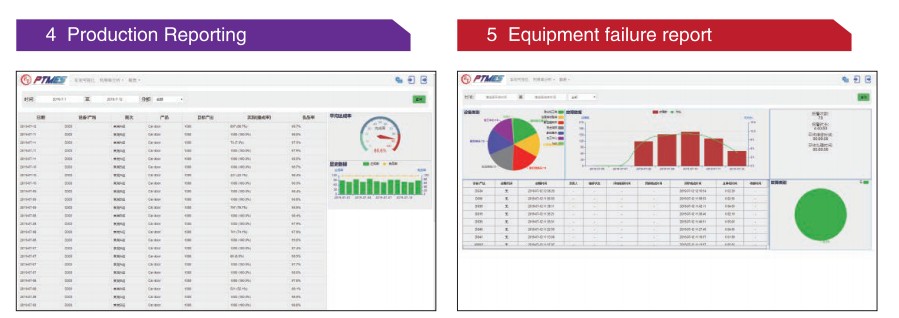 The production data reports for the entire workshop or individual equipment can be automatically generated, and detailed data such as production yield, production quantity, production number, and production time consumption can be visually displayed in the report via PTMES.
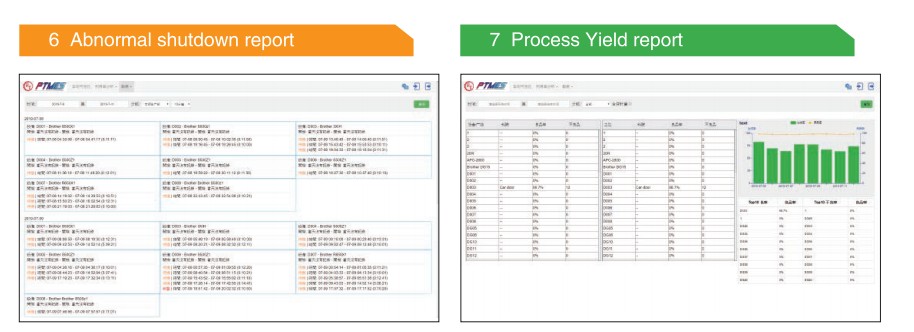
If the equipment is abnormally shut down, the PTMES system will record and produce an abnormal shutdown
report. This report will show you specific data such as downtime and equipment ownership.
The powerful status monitoring function of PTMES can realize the visual presentation of the production and
processing yield data within the specified time period, and record the data information in detail in the report. Provide
a valuable basis for yield and targeted improvement.